
Muskoka Cottage Interior Design and Why It Differs From the City
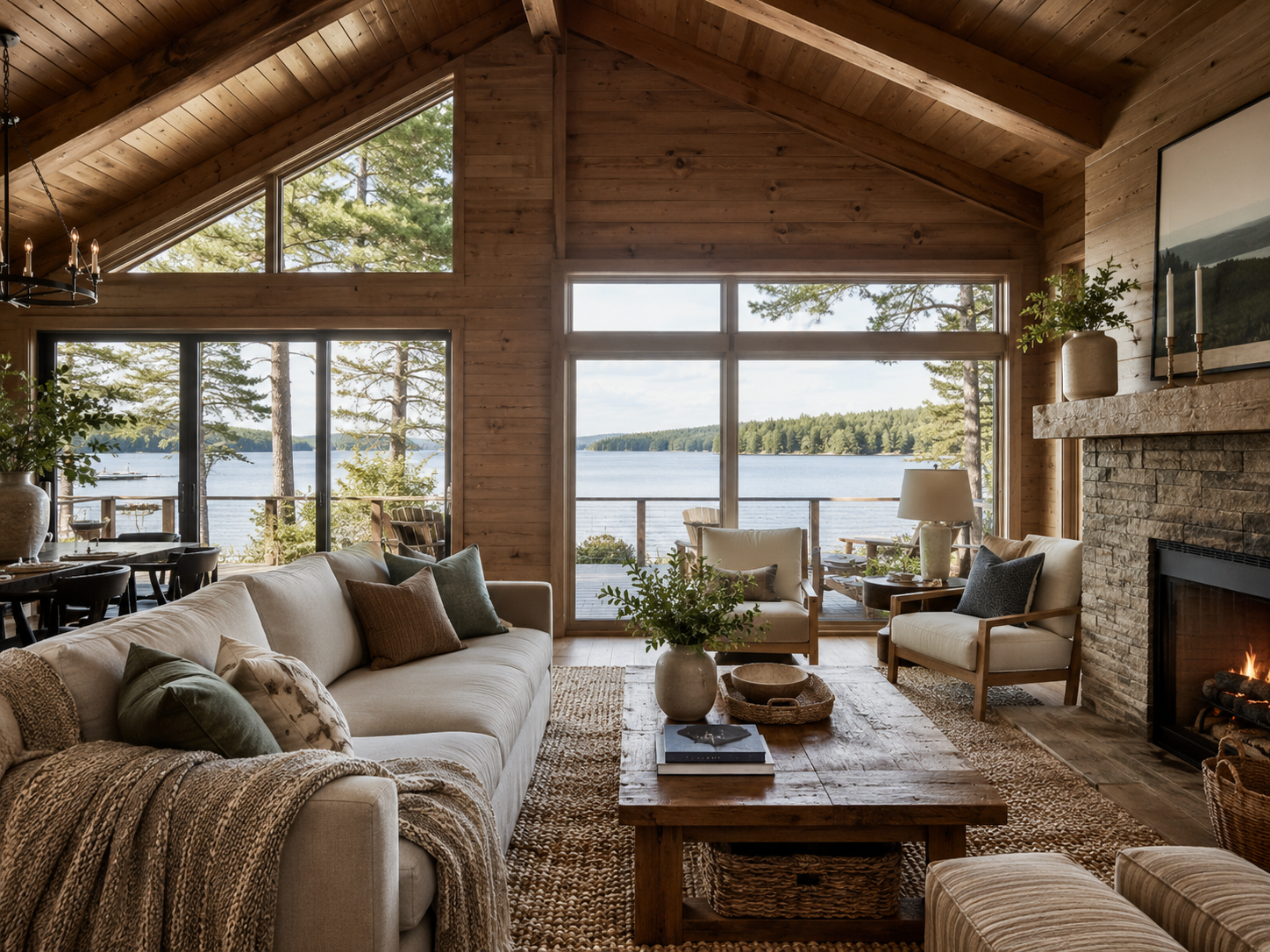
If you own a home in the city and a cottage on the lake, you already know they ask different things of you. One is where your week happens. The other is where you go to stop. Yet when it comes time to design or refresh each space, a lot of homeowners reach for the same playbook, then wonder why the cottage still feels a little unfinished, or the city home feels a little too precious for everyday life.
Good design is never one approach applied everywhere. A home in Toronto and a cottage on Lake Rosseau are shaped by completely different conditions. Light, climate, how often you're there, who comes to stay, and what you want to feel when you walk through the door all change the answer. Understanding those differences is what separates a space that photographs well from one that actually works.
Here's how design needs shift between a Muskoka cottage and a city home, and why getting it right matters more than most people expect.
Start with how you actually live in each space
Your city home carries the weight of daily life. Mornings, work, routines, the coming and going of a full week. It tends to reward efficiency, calm, and a layout that supports getting things done without friction.
A Muskoka cottage has a different job. It's built around rest and gathering. Long weekends, holidays, grandkids, guests who stay for days rather than hours. That means the cottage often needs to sleep and seat more people, hold up to a busier rhythm, and flex between quiet mornings and full-table dinners.
Designing both the same way ignores the reason each exists. The most useful first question is not "what style do I want," it's "how do I actually use this space, and who am I sharing it with." The style follows from there.
Light works differently by the lake
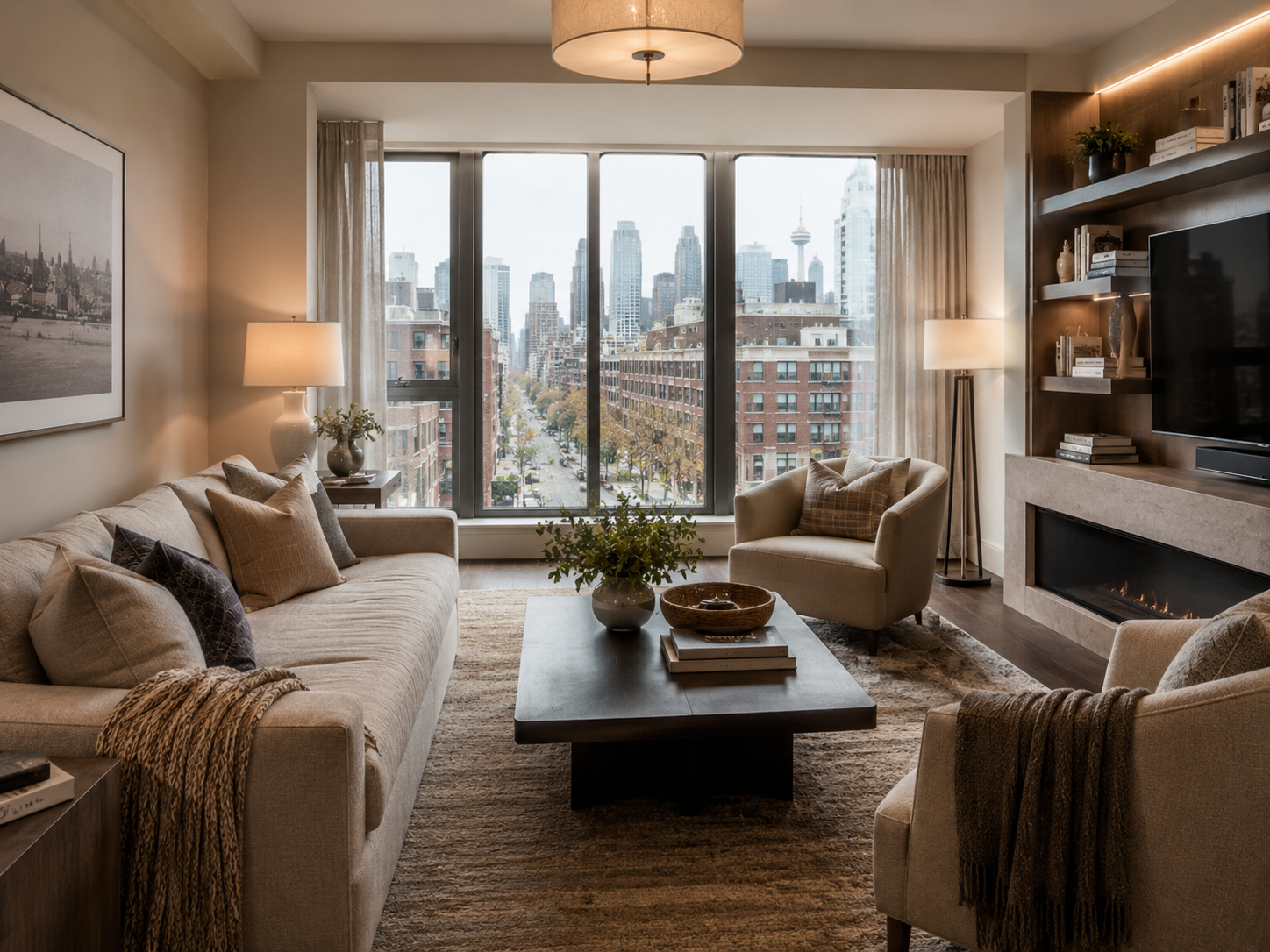
City design spends a lot of energy managing light. You're working around neighbouring buildings, privacy from the street, and rooms that lean on layered artificial lighting to feel warm after dark.
Muskoka gives you the opposite problem, in the best way. The light off the water is generous and always shifting, and the view is often the most valuable thing in the room. Cottage design should frame that, not compete with it. That changes where furniture goes, how window treatments are handled, and how you choose a palette that holds up against strong natural light instead of getting washed out by it.
A colour scheme that feels rich and grounding in a city living room can read flat and cold in a bright lakeside room. The setting has a say.
Materials have to earn their place at the cottage
This is where the two spaces diverge the most, and where mistakes get expensive.
A city home can lean into more delicate, refined finishes because daily use is fairly predictable. A cottage sees wet swimsuits, sandy feet, dogs, kids, sunscreen, and a rotating cast of guests who don't know which surfaces you baby. Add Muskoka's humidity and seasonal temperature swings, and materials that looked beautiful on day one can warp, stain, or wear out fast.
Cottage design should favour performance fabrics, durable flooring, and finishes that shrug off moisture and traffic. Done well, none of this looks industrial or compromised. It simply means the space stays beautiful through years of real use instead of asking everyone to be careful. Durability and elegance are not opposites here. They're the whole point.
Seasonality changes everything, especially in Muskoka
One of the first things worth clarifying is whether your cottage is three-season or four-season, because it shapes nearly every decision after that.
A four-season cottage needs to feel as good in February as it does in July. That affects heating, insulation, textures, layering, and the kind of warmth a space holds when the lake is frozen. A seasonal cottage has different priorities and different practical realities around winterizing and storage.
City homes rarely require this level of seasonal thinking. In Muskoka it's foundational. Designing without accounting for it is how people end up with a beautiful summer space that feels uninviting the rest of the year.
The cottage should connect you to the outside
City design often works hard to create privacy and separation from what's around you. Cottage design does the reverse. The dock, the deck, the water, and the tree line are the reason you're there, so the design should pull them inward.
That shows up in the transitions. A screened porch that becomes a second living room. A mudroom that actually handles boots, life jackets, and paddles instead of pretending they don't exist. Sightlines that carry from the kitchen to the water. Gear storage that keeps the practical side of lake life organized rather than piled by the door.
These are the details that make a cottage feel effortless. They're also the ones most often skipped when someone imports a city floor plan onto a lakefront lot.
Your Muskoka cottage is also an investment
For most secondary homeowners, the cottage is more than a retreat. It's a significant asset in one of Ontario's most desirable markets, and thoughtful design protects and grows that value.
Cohesive, well-executed interiors read as care. They signal a property that has been maintained and considered, which matters if you ever rent it, pass it down, or sell. Design choices that suit the setting also age better, which means fewer costly redos down the road. Spending intentionally on the right things, in the right places, is not an indulgence. It's how you keep a high-value property performing like one.
Why location-specific design matters
The through line is simple. A space designed for where it actually is, and for how you actually live in it, does three things a copied approach never will.
It functions, because the layout and materials match real use. It lasts, because the finishes suit the climate and the traffic. And it feels right, because the mood fits the purpose of the place, calm and refined in the city, warm and unwound at the lake.
When those things line up, you stop noticing the design and start enjoying the space. That's the goal. Not a cottage that looks like a magazine and behaves like a museum, and not a city home that feels like it's trying too hard. Two spaces, each doing its own job well.
Frequently asked questions
Do I need a different designer for my cottage and my city home? Not necessarily. What matters more is working with a designer who understands both contexts and knows how the priorities shift between them. One designer who sees the full picture can keep a sense of continuity across both spaces while still designing each for its setting.
How is designing a Muskoka cottage different from a city home? The biggest differences are durability, seasonality, light, and how the space connects to the outdoors. A cottage takes more wear, has to handle Muskoka's climate, is built around views and water access, and often needs to host more people than a typical city home.
Should my cottage match my city home's style? It can share a design language so both feel like you, but it shouldn't be a copy. The finishes, layout, and mood should each suit their own location. A little continuity is good. An identical scheme in two very different settings usually leaves one of them feeling off.
Does thoughtful cottage design actually add value in Muskoka? Yes. Cohesive, well-built interiors that suit the property tend to hold up better, appeal more strongly to future buyers or renters, and require fewer redos over time. In a market like Muskoka, that's meaningful.
Thinking about your cottage, your city home, or both
Balancing two spaces is easier with someone who understands what each one needs. If you're planning a project in the city, on the lake, or moving between the two, we're always glad to talk it through and help you feel confident about the next step.
